Working across narrative cinema, immersive media, and critical video essays, I make
character-centered work about people who are often overlooked, unheard, or misread:
a person worn down by bureaucracy, grief and financial strain, a painter measuring
herself against an impossible standard, a photographer losing their sight. Empathy is
the foundation, the process, and the intended result of my practice.
Cinema became meaningful to me when I first recognized how a simple display of moving
images was able to impact me so profoundly. That encounter has continued to shape my
artistic philosophy. I understand filmmaking as a formal and ethical practice of
attention: through performance, framing, duration, sound, and narrative structure, I
strive to create spaces in which audiences can confront the distance between them and
the characters – before the eventual realization of the shortness of that distance.
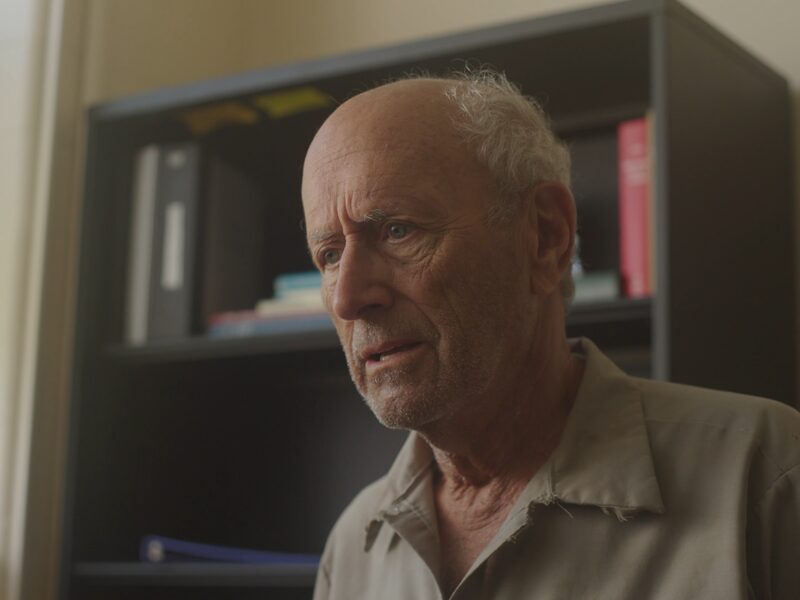
My most recent narrative short, Pay the Difference, currently in
post-production, develops this inquiry through an intimate story about economic
insecurity and bureaucracy. The film traces how administrative and financial pressures
can reshape relationships, constrain choices, and alter an individual’s sense of
dignity. Rather than presenting bureaucracy as an abstract institution or offering a
simple social diagnosis, I use character-centered fiction to explore its intimate
consequences and the human cost it incurs. The project continues my commitment to
narrative filmmaking grounded in social reality and moral ambiguity.
In Waiting Rooms, a critical virtual-reality project currently under
development, I extend the same questions from my narrative short to a more interactive
form. The work places participants within the bureaucratic aftermath of death, where
formal requirements, endless waiting, and procedural demands interrupt the ability to
grieve. By limiting the participant’s agency, the project makes bureaucratic
power experiential rather than merely representational: the user must face delay,
uncertainty, and constraint. The project utilizes and explores the potential and the
limits of immersion within virtual reality. Both the narrative short and VR project
are a part of my MFA thesis work.
Across these projects, I am interested in how media forms can make systems of power
felt at the scale of ordinary human experience. Whether through the intimacy of
narrative fiction or the constrained agency of immersive media, I use form not simply
to represent social structures but to examine how they shape perception and agency at
the individual level.
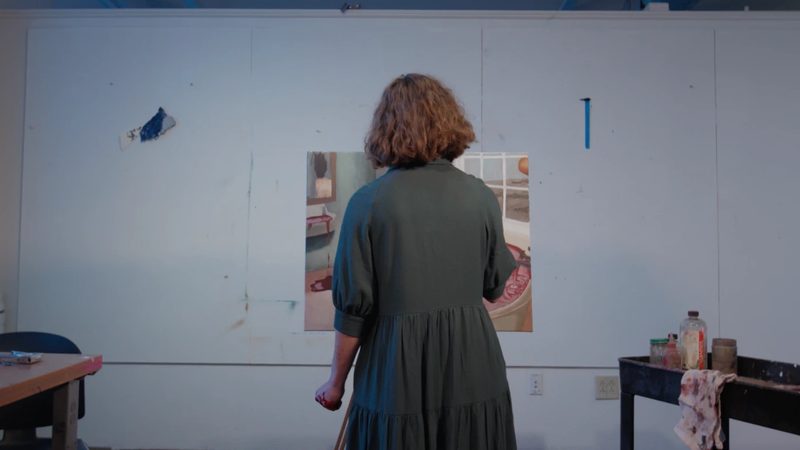
I also worked on another short film project, Worthy (2025), for one of my
courses. Worthy is a character study of a painting student who resolves to
either become a great painter in a single day or never paint again. The film unfolds
as a wordless montage scored to Vivaldi’s “Winter,” while putting us
in the character’s perspective as she destroys her past work and pushes herself
beyond her limits. The film was selected for exhibition at the University Film &
Video Association Conference in 2026.
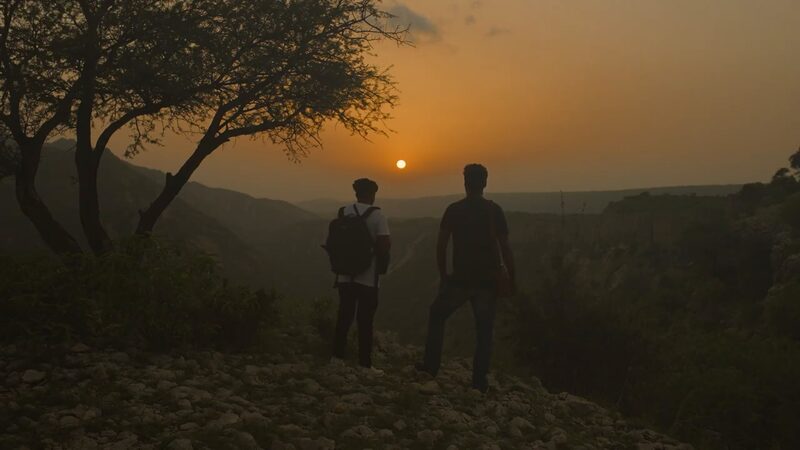
My film, Color of Sunset (2022), was also designed as a character study
exploring the life of a photographer gradually losing their vision. The film was
rooted in my interest in exploring complex characters that often go unnoticed or are
misunderstood. The film was well-received at numerous international film festivals
including screenings in Malaysia, Russia, Sweden and Bangladesh. The film was exhibited
at the Pakistan National Council of Arts in Islamabad. Color of Sunset also
won Best Debut Director and Best Student Short Film awards at the Nitiin International
Film Festival in Malaysia.
As a filmmaker-scholar, I intend to sustain a practice in which creative production and
research continually inform one another. My long-term goal is to develop films and
media projects that are both emotionally resonant and critically engaged in the
contemporary media landscape. I aim to continue my contributions to textual and
audiovisual scholarship on cinematic realism, hybrid forms, and spectatorship. I also
plan to collaborate with students and colleagues across film production, media studies,
interactive design, and the humanities because an integrated approach treats creative
work as research and brings theory, history, and media-making into active conversation.