Musawir
Abrar
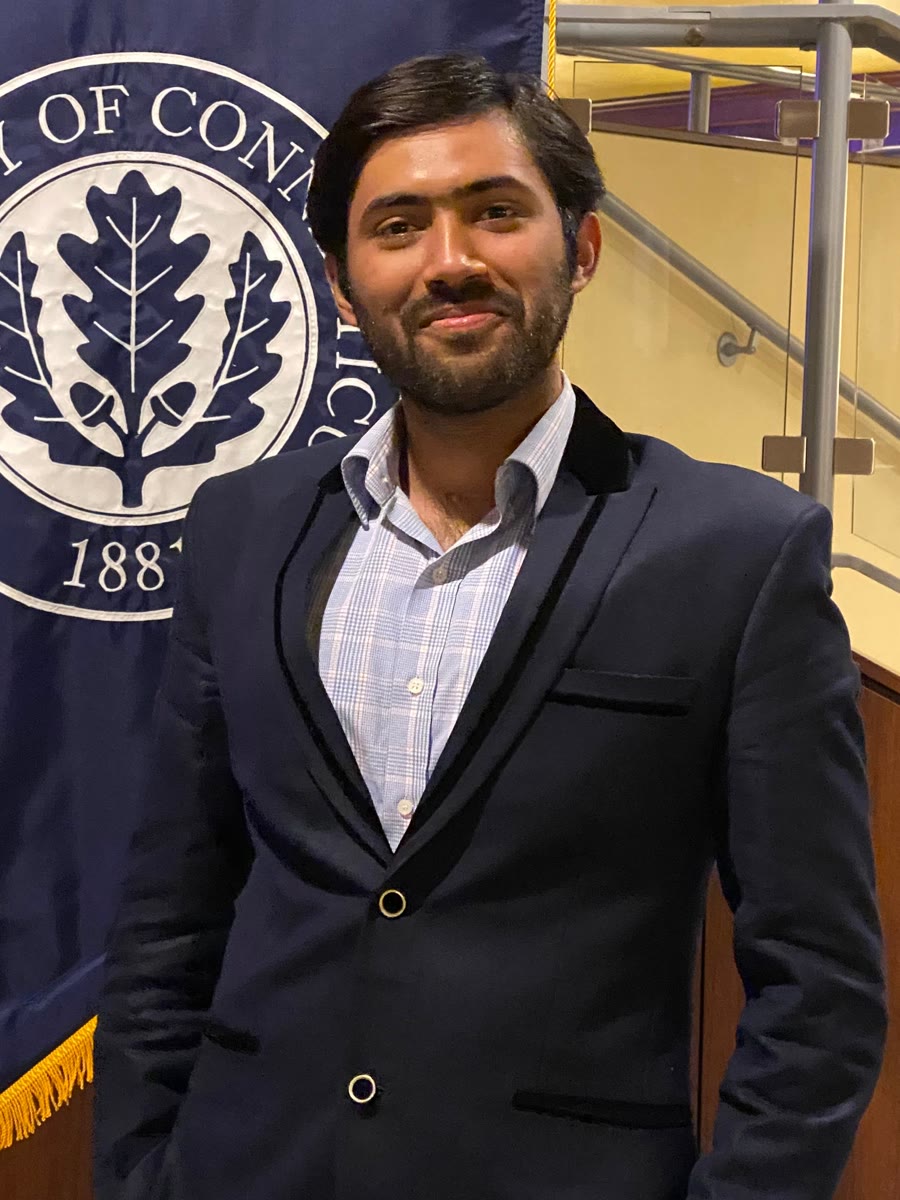
Filmmaker, educator, and filmmaker-scholar. I make character-centered narrative films about people who are often overlooked, unheard, or misread. Working in Storrs, Connecticut.
Empathy is the foundation, the process, and the intended result of my practice.
About
My work explores characters that hold on to dignity and selfhood under pressure.
My creative practice examines how people hold on to dignity and selfhood under pressure, whether that pressure comes from the systems around them or from within. I make character-centered narrative films about people who are often overlooked, unheard, or misread: a man worn down by bureaucracy, grief, and financial strain; a painter measuring herself against an impossible standard; a photographer losing their sight.
I understand filmmaking as a formal and ethical practice of attention. Through performance, framing, duration, sound, and narrative structure, I try to create spaces where audiences confront the distance between themselves and a character, and then recognize how short that distance actually is. I write, direct, produce, and edit my own films, and editing my own work has shaped how I shoot and write, because I am already thinking in terms of rhythm and duration when I am on set or at the page.
I treat narrative filmmaking as a practice-based research method, working from documented conditions: Pay the Difference came out of labor law, reporting on families who cannot afford to claim their dead, and conversations with a handyman and a funeral home worker. A statistic about misclassification produces agreement or disagreement, but time spent inside a life unlike your own produces something closer to empathy. Waiting Rooms puts the same subject in a form that is inhabited rather than watched.
My written research pursues a related question about form. At the 2025 University Film & Video Association conference I presented “Abbas Kiarostami’s Methods of Bridging Documentary and Fiction: A Study of Close-up,” which traces how documentary technique placed inside a fiction film produces a sense of reality stronger than the one the film began with. I am completing an MFA in Digital Media & Design at the University of Connecticut, where I have been Instructor of Record since 2025, and I hold a 2025 UFVA Graduate Fellowship.